
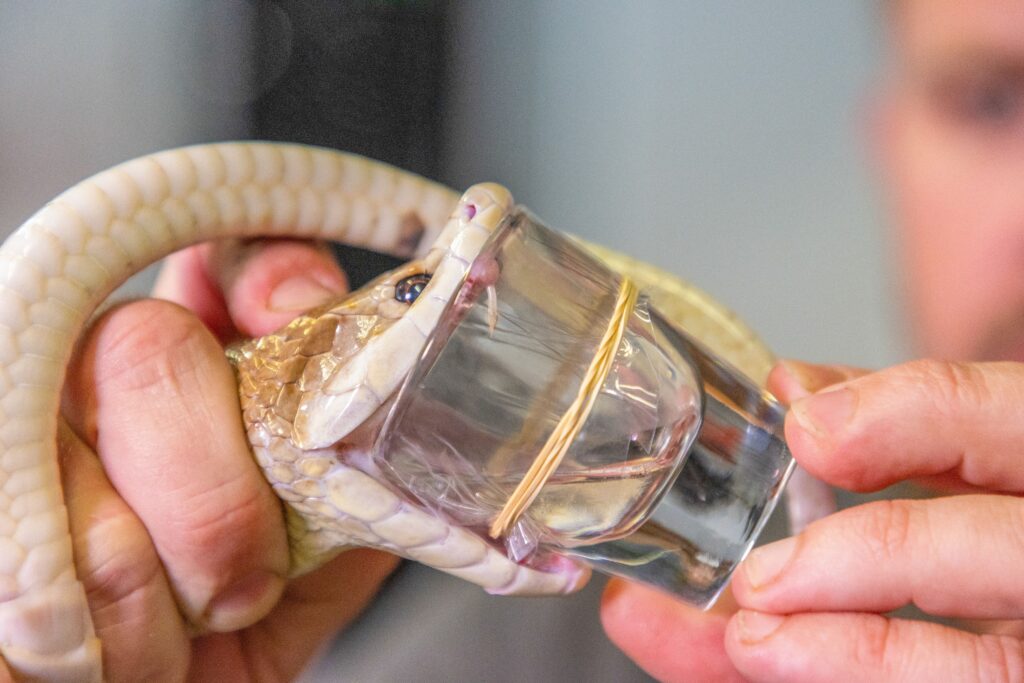
Snake venom is a toxic secretion produced by certain species of snakes and delivered through their fangs. It’s used primarily to immobilize prey and for defense.
Full list of venom (species) below
🧪 What Is Snake Venom Made Of?
Snake venom is a complex mix of:
Proteins & enzymes
Neurotoxins (affect the nervous system)
Hemotoxins (affect blood and tissues)
Cytotoxins (damage cells)
Cardiotoxins (affect the heart)
Different snake species have very different venom compositions.
🐍 Types of Venom (By Effect)
🧠 Neurotoxic Venom
Attacks the nervous system and can cause:
Paralysis
Breathing failure
Common in snakes like the King Cobra and Black Mamba.
🩸 Hemotoxic Venom
Damages blood cells and tissue, causing:
Severe pain and swelling
Internal bleeding
Tissue destruction
Found in snakes like the Russell’s Viper and Western Diamondback Rattlesnake.
🔥 Cytotoxic Venom
Destroys tissue at the bite site, often leading to necrosis.
⏱️ What Happens After a Bite?
Symptoms depend on the species but may include:
Immediate pain and swelling
Nausea or vomiting
Difficulty breathing
Blurred vision
Weakness or paralysis
A venomous bite is a medical emergency.
💉 Treatment
Antivenom (antivenin) is the primary treatment.
Supportive hospital care (oxygen, fluids, wound management).
Fast treatment significantly improves survival rates.
🧬 Medical Uses of Snake Venom
Interestingly, venom has led to important medicines:
Blood pressure drugs (e.g., ACE inhibitors were inspired by viper venom research).
Research into cancer treatments and pain management.
If you’d like, I can explain:
The most venomous snakes in the world
The difference between venomous vs. poisonous
What to do in a snakebite emergency
Or how antivenom is made**
🦂 Scorpion Venom
Scorpion venom is a complex mixture of neurotoxins designed to paralyze prey and deter predators.
🔬 What It Does
Most scorpion venom affects ion channels (sodium, potassium, calcium) in nerve cells, which can cause:
Intense pain (often immediate and severe)
Muscle twitching
Sweating and drooling
Breathing difficulty (in severe cases)
Heart rhythm disturbances
🧪 Potency Varies by Species
Only about 30–40 scorpion species are considered medically significant. Some of the most dangerous include:
Deathstalker
Indian Red Scorpion
Arizona Bark Scorpion
Healthy adults often recover with treatment, but children are at higher risk of severe reactions.
💉 Treatment
Pain control
Monitoring in hospital
Antivenom in serious cases (available in some regions)
🐸 Toad Venom (Toxins)
Unlike scorpions and snakes, toads are generally poisonous, not venomous.
That means they secrete toxins from their skin, rather than injecting them through a sting or bite.
🧴 How It Works
Many toads have parotoid glands behind their eyes that release milky toxins when threatened.
These toxins can contain:
Bufotoxins (affect the heart)
Bufotenin (a psychoactive compound in some species)
🧪 Notable Species
Cane Toad – Highly toxic; dangerous to pets.
Colorado River Toad – Secretes compounds including 5-MeO-DMT (psychoactive).
⚠️ Effects of Toad Toxins
Nausea and vomiting
Irregular heartbeat
Confusion or hallucinations (in certain species)
In severe cases: seizures or cardiac arrest
Pets (especially dogs) are commonly poisoned by biting or mouthing toxic toads.
🧠 Key Difference
| Animal | Venom Type | Delivery Method |
|---|---|---|
| Scorpion | Venomous | Injects via stinger |
| Toad | Poisonous | Secretes toxins through skin |
🏥 If Exposure Happens
Scorpion sting: Seek medical care if symptoms are severe, especially for children.
Toad toxin exposure: Rinse mouth/skin thoroughly with water and seek urgent care (especially for pets).
OUR AVAILABLE VENOMS
Snake Venom
Species – Known As
- Aspidelaps scutatus – Shield Nose Snake
- Atheris Chloreschis – Bush Viper
- Atheris Nitschei – Great Lakes Bush Viper
- Bitis arietans – Puff Adder
- Bitis caudalis – Horned Adder
Bitis gabonica – Gaboon Adder
Bitis nasicornis – Rhino Viper
Bitis rhinoceros – West African Gaboon Adder
Bothrops Atrox – Fer-Der-Lance
Causus rhombeatus – Night Adder
Cerastes Cerastes – Horned Viper
Dendroaspis angusticeps – Green Mamba
Dendroaspis polylepis – Black Mamba
Dendroaspis jamesoni – Jameson’s Mamba
Dendroaspis viridis – West African Green Mamba
Dispholidus typus – Boomslang
Echis Leucogaster – White-bellied Carpet Viper
Echis Pyramidium – North East Carpet Viper
Echis Ocellatus – West African Carpet Viper
Echis Coloratus – Painted Carpet Viper
Hemachatus Haemachatus – Rinkhals
Naja annulifera – Snouted Cobra
Naja Kaouthia Kaouthia – Monocle Cobra
Naja melanoleuca – Forest Cobra
Naja pallida – Red spitting Cobra
Naja mossambica – Mozambique Spitting Cobra
Naja Nubiae – Nubian Spitting Cobra
Naja Nivea – Cape Cobra
Naja Haje Haje – Egyptian Cobra
Naja Nigricollis – Black-necked Spitting Cobra
Proatheris Superciliaris – Swamp Viper
Pseudocerastes Persicus – Spider Tail Horned Viper
Rhamphiophis Rostratus – Rufous Beaked Snake
Trimerusurus Okinawnesis – Okinawa Habu
Walterinnesia Aegyptia – Black Desert Cobra
Scorpion Venom
Species – Known As
- Androctonus Crassicauda – Arabian Fat-Tailed Scorpion
- Androctonus Amoreuxi – Fattail Scorpion
- Buthus Occitanus – Common Yellow Scorpion
- Buthacus Arenicola – North African Scorpion
- Lieurus Quinquestriatus – Deathstalker
FROG / TOAD VENOM
Species – Known As
- Phrynomantis Bifasciatus – Red-Banded Rubber Frog
- Bufo Garmani – Garman’s Toad
- Schismaderma Carens – Red Toad
- Kassina Senegalensis – Bubbling Kassina